
Overview of Landscape Lighting Installation Costs
Residential Landscape Lighting Costs: What Homeowners Can Expect
Commercial Landscape Lighting Costs: Scale, Compliance, and Performance
Average Cost Comparison: Residential vs. Commercial Landscape Lighting
Key Factors That Influence Installation Costs
Long-Term Costs and Return on Investment
FAQs
Landscape lighting has become an essential feature for both residential and commercial properties. Beyond visual appeal, a well-designed lighting system improves safety, security, and functionality after dark. From illuminating walkways and gardens in private homes to lighting parking lots, building facades, and public spaces in commercial environments, landscape lighting plays a crucial role in how a property is experienced at night.
However, one of the most common concerns for property owners, developers, and facility managers is understanding the cost to install landscape lighting. The total expense can vary significantly depending on property type, system design, materials, labor, and long-term operational considerations. This article provides a comprehensive and practical overview of landscape lighting installation costs for both residential and commercial properties, helping readers plan budgets more accurately and make informed decisions.
Overview of Landscape Lighting Installation Costs
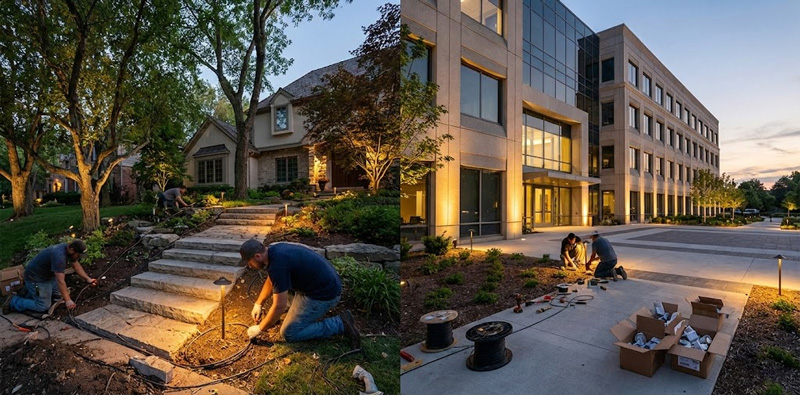
Landscape lighting installation costs generally fall into three major categories: materials and fixtures, labor and electrical work, and design and system planning. While these components exist in both residential and commercial projects, their scale and complexity differ greatly.
Residential installations typically focus on aesthetics and personal comfort. Homeowners often prioritize highlighting gardens, trees, architectural features, patios, and pathways. These systems are usually low-voltage and relatively small in scale, making them more affordable and easier to install.
Commercial landscape lighting, by contrast, is driven by safety, compliance, and operational efficiency. These projects often involve large outdoor areas, higher illumination levels, and stricter regulatory requirements. As a result, commercial installations require more fixtures, more powerful lighting systems, and advanced control technologies.
On average, residential landscape lighting installation costs range from $2,000 to $6,000, while commercial projects typically start around $10,000 and can exceed $50,000, depending on size and complexity.
Residential Landscape Lighting Costs: What Homeowners Can Expect
For residential properties, the cost to install landscape lighting is influenced by both design choices and site conditions. A small project that includes basic pathway lighting and a few accent lights will be significantly less expensive than a full-property lighting design covering front and back yards, architectural features, and outdoor living spaces.
The most common residential lighting systems use low-voltage LED fixtures, which offer a balance between performance and efficiency. While LEDs have a higher upfront cost than traditional halogen lights, they consume less electricity, generate less heat, and last significantly longer. Over time, this results in lower operating and maintenance costs.
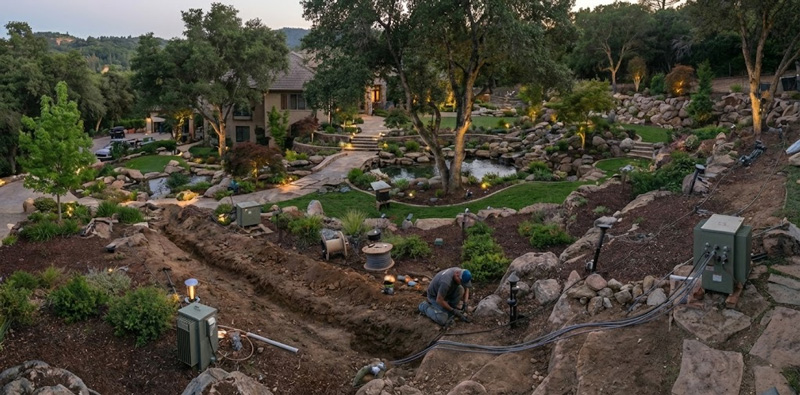
Labor costs also play a major role in residential installations. Simple layouts that require minimal trenching and easy access to power sources are more affordable. More complex properties—such as those with uneven terrain, dense landscaping, or long distances between fixtures—require additional labor, increasing total costs.
Homeowners may also choose to hire a professional lighting designer. Although this adds to the upfront investment, professional design often results in better fixture placement, improved visual balance, and a more refined nighttime appearance.
Commercial Landscape Lighting Costs: Scale, Compliance, and Performance
Commercial landscape lighting installations are fundamentally different from residential projects due to their scale and purpose. These systems are designed not only to enhance appearance but also to meet safety standards, improve visibility, and support business operations.
One of the primary cost drivers in commercial projects is coverage area. Parking lots, office campuses, retail centers, hotels, and industrial facilities often require dozens or hundreds of fixtures. High-output LED pole lights, floodlights, and wall-mounted fixtures are commonly used to achieve consistent illumination over large spaces.
Another major factor is regulatory compliance. Commercial lighting systems must adhere to local building codes, energy efficiency regulations, and sometimes dark-sky requirements. This often necessitates detailed planning, permitting, and inspection processes, all of which contribute to higher overall costs.
Commercial systems frequently incorporate advanced control technologies, such as timers, photocells, motion sensors, and centralized lighting management systems. While these features increase upfront costs, they significantly reduce long-term energy consumption and operational expenses.
Average Cost Comparison: Residential vs. Commercial Landscape Lighting
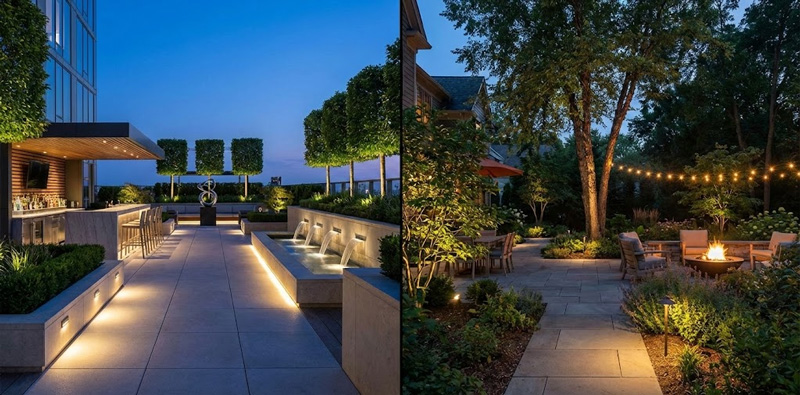
The table below provides a general comparison of typical landscape lighting installation costs. Actual pricing may vary depending on location, contractor rates, and specific project requirements.
| Cost Category | Residential Properties | Commercial Properties |
|---|---|---|
| Typical Total Cost | $2,000 – $6,000 | $10,000 – $50,000+ |
| Cost per Installed Fixture | $150 – $400 | $300 – $1,000 |
| Common Applications | Gardens, pathways, patios | Parking lots, building exteriors |
| Electrical Complexity | Low to moderate | High |
| Design Requirement | Optional | Usually required |
| Energy Efficiency Focus | Moderate | High |
While the table above provides a general cost range, actual landscape lighting costs vary by property size, number of fixtures, and project type. To help you estimate your own project more accurately, you can use the simple cost calculator below.
Landscape Lighting Cost Estimator
Estimate Notes
- Calculations are based on average per-fixture installation costs for LED landscape lighting.
- Final pricing may vary due to site conditions, wiring scope, and electrical requirements.
- Commercial installations may involve additional compliance or control systems.
- This estimate represents a budgetary range only, not a final quotation.
Key Factors That Influence Installation Costs
Although every project is unique, several consistent factors have the greatest impact on the total cost of landscape lighting installation:
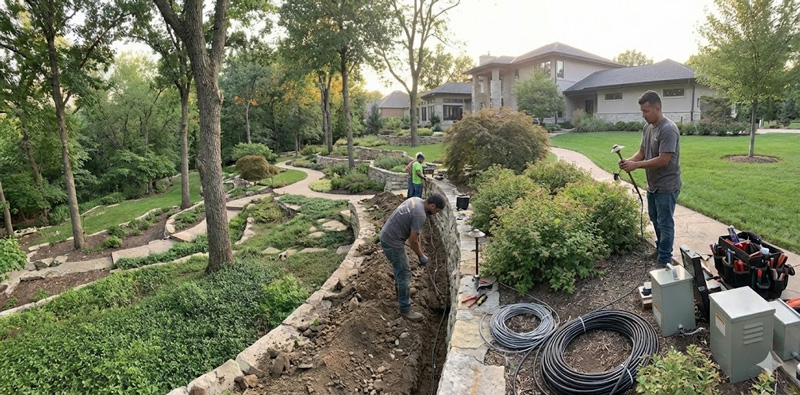
Property Size and Layout
Larger properties require more fixtures, longer wiring runs, and additional transformers or power sources. Irregular layouts, slopes, and landscaping obstacles can further increase labor time and complexity.
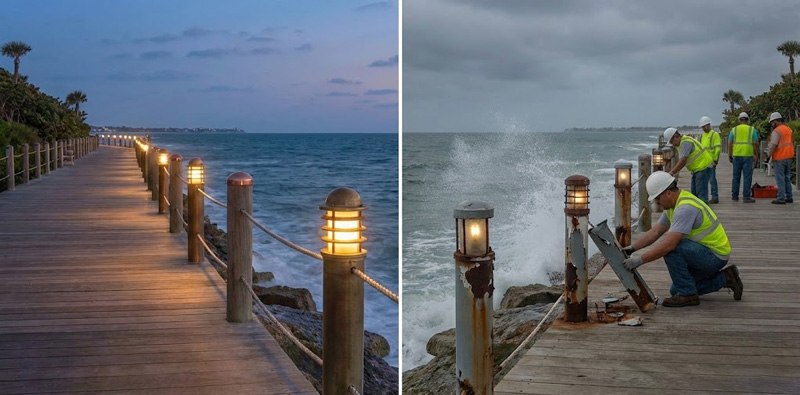
Fixture Quality and Material Selection
High-quality fixtures made from brass, copper, or marine-grade aluminum cost more upfront but offer superior durability, especially for commercial or coastal environments. Cheaper fixtures may reduce initial costs but often result in higher maintenance expenses.
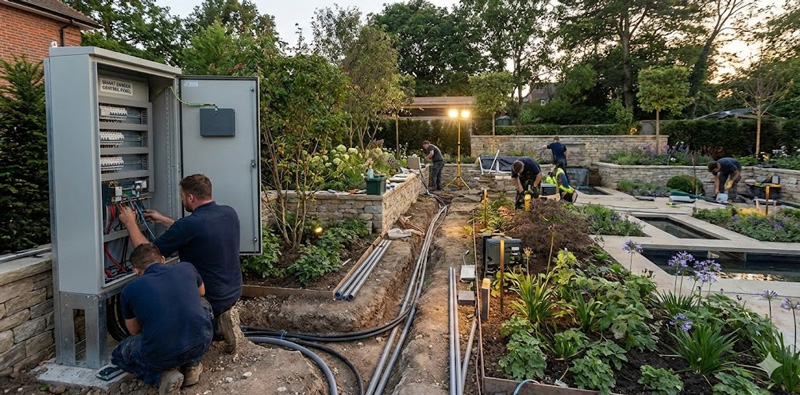
Electrical Infrastructure and Control Systems
Projects that require new electrical panels, underground conduit, or advanced lighting controls will have higher installation costs. Smart controls increase efficiency but add to system complexity.
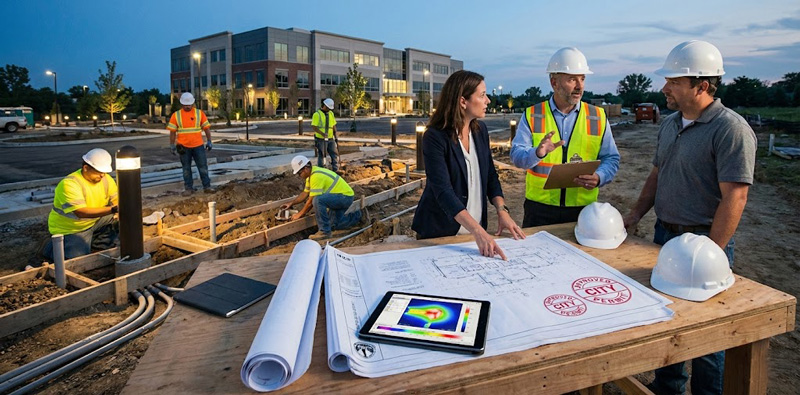
Design, Permits, and Compliance Requirements
Commercial projects in particular often require professional design services, permitting, and inspections, all of which add to the overall budget.
Long-Term Costs and Return on Investment
When evaluating the cost to install landscape lighting, it is essential to consider long-term ownership costs rather than focusing solely on initial installation expenses. Energy usage, maintenance, and system lifespan all contribute to the total cost over time.
LED landscape lighting systems dramatically reduce electricity consumption compared to older technologies, often lowering energy costs by 60–80%. This is especially beneficial for commercial properties that operate lighting systems for extended hours.
Maintenance costs are also significantly lower with modern LED fixtures, which can last decades under normal use. Reduced bulb replacement and fewer system failures translate into long-term savings.
From an investment perspective, residential landscape lighting increases curb appeal, enhances property value, and improves quality of life. Commercial lighting investments contribute to improved safety, better customer experiences, and reduced liability risks—often making them financially justifiable despite higher upfront costs.
FAQs
Does landscape lighting installation require permits?
In many regions, low-voltage residential landscape lighting does not require a permit.
However, commercial installations or systems using line voltage often do require permits and inspections.
Because local building codes and zoning rules vary, it is best to confirm requirements with local authorities before starting installation.
How long does a typical landscape lighting installation take?
A standard residential landscape lighting installation usually takes one to two days.
The timeline depends on fixture count, wiring complexity, and site conditions.
Commercial projects may take several days to multiple weeks, especially if trenching, permitting, or advanced control systems are involved.
Can landscape lighting be installed on existing landscaped areas?
Yes. Professional installers can add lighting to established landscapes with minimal disruption.
Methods such as shallow trenching and directional boring help route wiring underground while preserving plants, lawns, and hardscape features.
What is the difference between low-voltage and line-voltage landscape lighting?
Low-voltage lighting (typically 12V) is common for residential use due to improved safety, energy efficiency, and flexibility.
Line-voltage lighting (120V) is more often used in commercial or large-scale projects where higher output and longer cable runs are required.
How often should landscape lighting systems be inspected or adjusted?
Landscape lighting systems should be inspected at least once per year.
Adjustments are often needed as plants grow, soil settles, or fixtures shift over time.
Regular inspection helps maintain proper illumination, safety, and long-term system performance.